
Peak season in Himarë (June – August) doesn’t hit everyone the same way. For some, it’s the Albanian Riviera at its best, bright water, long beach days, and warm nights that stretch on endlessly. For others, it’s crowded, hot, and slightly overwhelming from the moment they arrive.
I remember arriving at Himara beaches in July and being hit immediately by the heat rolling off the coast road, the buzz of scooters squeezing through town, and that first glimpse of the beach packed with umbrellas. It was beautiful, but also a lot to take in all at once.
So, is Himara actually worth visiting during peak season?
What Peak Season in Himarë Actually Feels Like (June – August)
I remember rolling into Himarë around midday in July and instantly thinking: I picked the worst possible time.
The road down to the coast felt like it was radiating heat back into the car, dry, heavy, almost trapped in the air itself.
And then you see it: scooters squeezing between cars, people looping for parking spots, and the whole town already in full summer chaos mode before you’ve even unpacked.
It’s not just busy; it’s layered in a way that’s hard to explain until you’re standing in it.
A few minutes later, I was walking through town, and it all clicked at once: cafés spilling onto the pavement, beach bars already playing music before noon, and every direction somehow pulling you toward the water.
You don’t really “arrive” in Himarë in peak season; you sort of get absorbed into it.
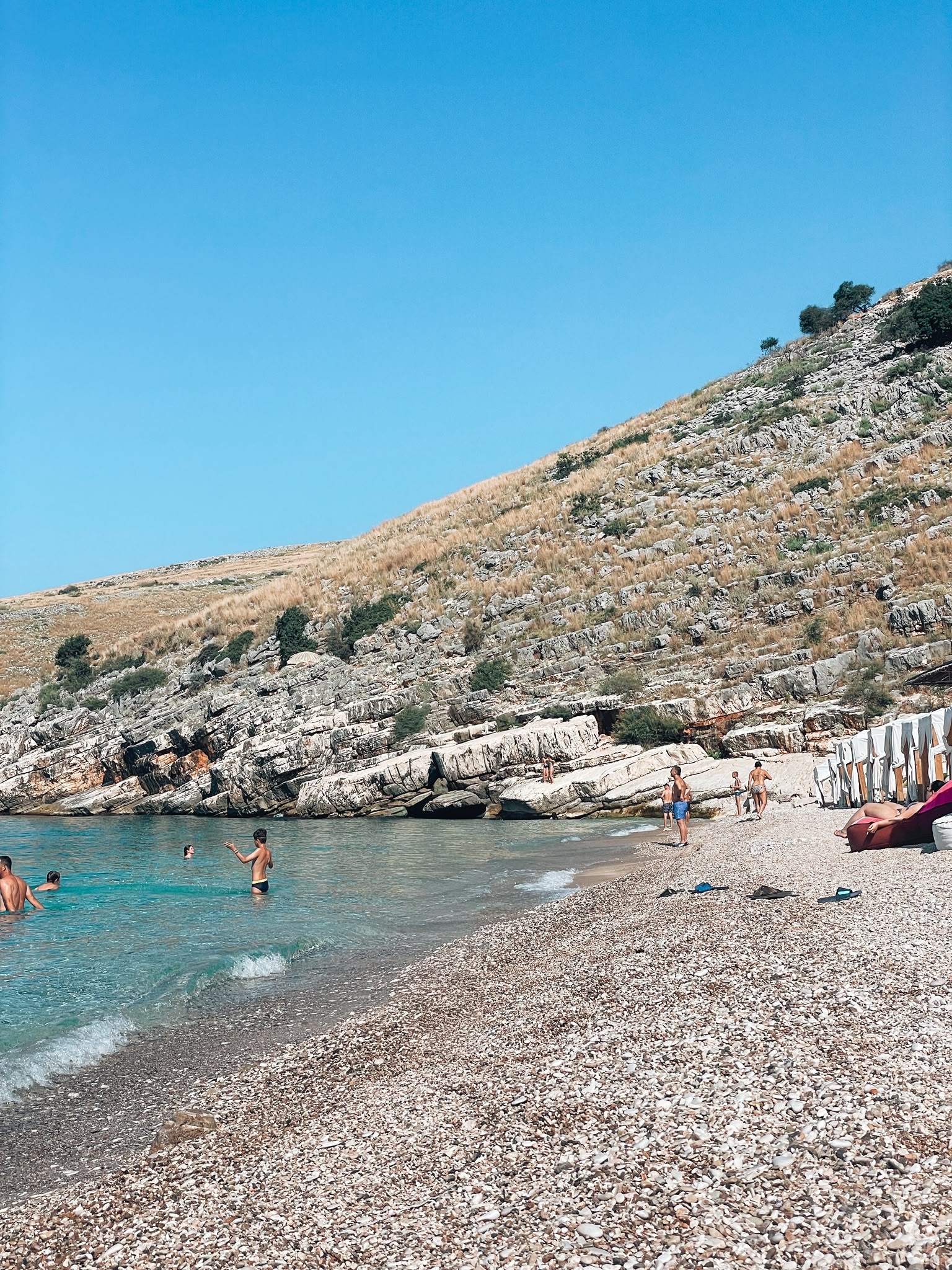
On the beaches, the water is still the star of the show, clear, warm, and incredibly inviting, but space becomes the trade-off. Popular spots fill up early, and by midday the shoreline is often lined with rows of umbrellas, towels, and groups settling in for a full beach day.
In town, the energy doesn’t really slow down. Restaurants stay busy into the evening, the promenade feels social and animated, and nightlife picks up just enough to remind you that this is very much a summer destination. It’s not a quiet escape during peak season; it’s a coastal town in full swing, with all the beauty and busyness that comes with it.
The Pros of Visiting Himarë in Peak Season
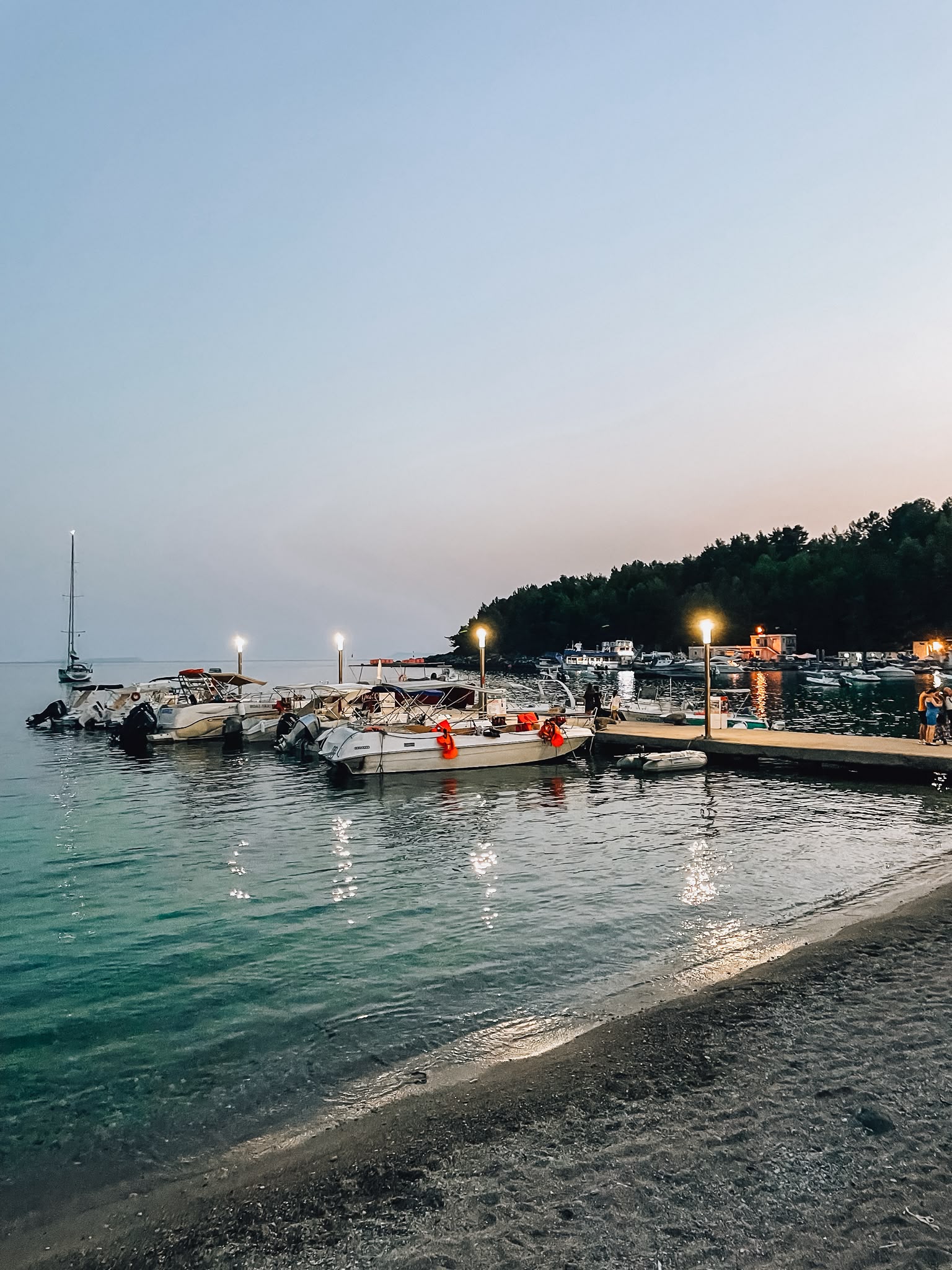
The first time I thought “okay, this is worth it” was late in the afternoon when the heat finally softened, and the whole coastline started glowing.
I remember one late afternoon on the beach when the heat finally softened, the water turned glassy, and the entire coastline lit up in that golden-hour glow that photos never quite capture properly. For a few minutes, even the crowds didn’t really matter.
That’s the thing about summer here: when it’s good, it’s really good.
One afternoon I ended up staying in the water for nearly an hour without even realizing it. The sea in peak season is that warm, calm, glassy, and almost too easy to stay in.
You don’t get that hesitation you sometimes feel in colder months. You just… keep going back in.
At one point I realized I had been in and out of the water for what felt like five minutes… but it was nearly an hour. You just don’t get that hesitation you usually have in colder seas.
It’s also the easiest time to experience everything the coastline has to offer. Boat trips run daily, hidden coves are fully accessible, and you can join tours without worrying about minimum group sizes or limited schedules. If you want to explore places like Gjipe or nearby beaches by sea, this is when everything is actually operating at full capacity.
If you’re ready to experience Gjipe Beach the easy way, you can join a boat tour here: Explore Gjipe Beach from Himarë → 5% off using the code JONALDASTOJANI5
On land, nothing feels half-open. I didn’t once find myself wondering if something was shut or unavailable; it just felt like everything was already in motion.
You don’t have to plan too carefully; you can just show up and find options everywhere, which makes travel feel effortless in a way that shoulder season sometimes doesn’t.
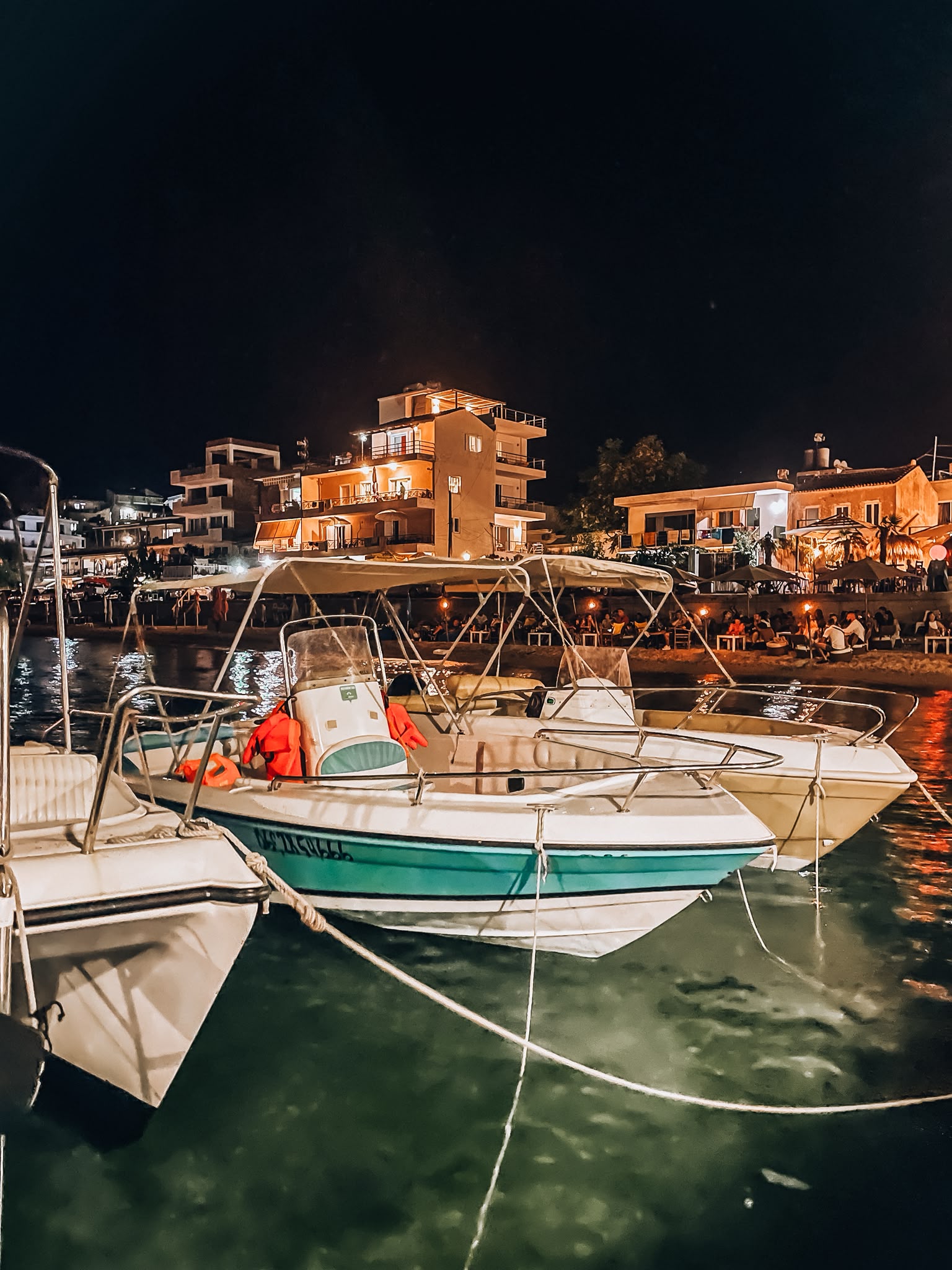
And then there’s the social side. Even if you’re not traveling for nightlife, there’s a lively, easygoing atmosphere in the evenings. Beach bars fill up, music drifts across the promenade, and it feels like the whole town is outside enjoying the same warm night.
But the real highlight is those postcard moments, when the sea is perfectly still, the light hits just right, and Himarë looks exactly like the version you saw in photos before booking your trip.
The Downsides of Himarë in Peak Season (What Nobody Tells You)
Of course, that same energy that makes summer in Himarë exciting is also what can make it a bit frustrating at times. I learned this quickly one afternoon when I spent nearly 30 minutes circling for parking, only to finally give up and walk much further than expected in the midday heat just to reach the beach.
Crowds are the most obvious downside. Beaches like Livadhi and Spile can feel surprisingly packed between late morning and mid-afternoon, especially in July and August. What looks spacious early in the day often turns into tightly arranged rows of umbrellas by lunchtime, which changes the whole feel of the coastline.
Prices also reflect the season. Accommodation is noticeably more expensive, and last-minute bookings can leave you with fewer options or places that don’t quite match what you’d get in June or September for the same budget. Even simple things like sunbeds or beachside drinks tend to creep up in cost during the busiest weeks.
Then there’s the practical side: parking, traffic, and general movement around town. Himarë is small, but in peak season it can feel congested in certain areas, especially near the main beaches and central streets. Getting from one spot to another often takes longer than you expect, not because of distance, but because of density.
Noise is another subtle shift. If you’re coming from off-season travel in Albania, the difference is noticeable. Evenings are lively, music carries farther, and quiet corners are harder to find unless you actively seek them out.
And perhaps the biggest change is emotional rather than logistical: the “hidden gem” feeling fades a little. Himarë is still beautiful, but in peak season it feels more like a well-known destination shared by many people at once, rather than a place you’ve stumbled upon by chance.
If you’re still deciding when to go, here’s a complete guide to the best time to visit Albania so you can pick the season that actually fits your travel style: Best time to visit Albania.

Who Should Visit Himarë in Peak Season (And Who Should Skip It)
One of the most interesting things about spending time in Himarë during peak season is how differently people experience it depending on their travel style. I remember sitting at a beach bar one evening and noticing three very different groups all within a few meters of each other: a family settling in for a long, relaxed dinner, a group of backpackers planning their next stop along the coast, and a couple trying to find a quieter corner away from the music. Everyone was in the same place, but clearly having a completely different experience.
I kept noticing it in small moments: people sitting on the same beach but clearly having completely different experiences. A family settling in for hours, backpackers already planning their next stop, someone else trying to find a quieter corner away from the music.
I saw this play out in real time one evening: families settling into long dinners without worrying about what was open, backpackers easily booking last-minute stays, and first-time visitors treating Himarë like a stress-free base for the coast.
If you’re new to the Albanian Riviera, this version of Himarë works in your favor: everything is running, everything is available, nothing feels complicated.
I saw families settle into long, easy beach days without rushing anywhere, while others were already planning their next stop along the coast.
The warm water, abundance of beach facilities, and constant activity make it easy to settle into a comfortable routine without needing to search too hard for things to do.
On the other hand, peak season is not the best match for everyone. If you’re someone who travels for quiet, space, and solitude, you’ll likely find the summer crowds a bit overwhelming. The same goes for slow travel enthusiasts who prefer empty beaches, local immersion, and a more relaxed rhythm; those experiences are much easier in shoulder season.
Budget travelers may also feel the impact. Prices for accommodation and services rise noticeably in summer, and flexibility becomes more limited if you’re booking at the last minute.
Ultimately, it’s less about whether peak season is “good” or “bad,” and more about whether it matches the way you like to experience a place.
Best Beaches in Himarë During Peak Season (And When to Go)
The beaches themselves change more than people expect, depending on the time of day.
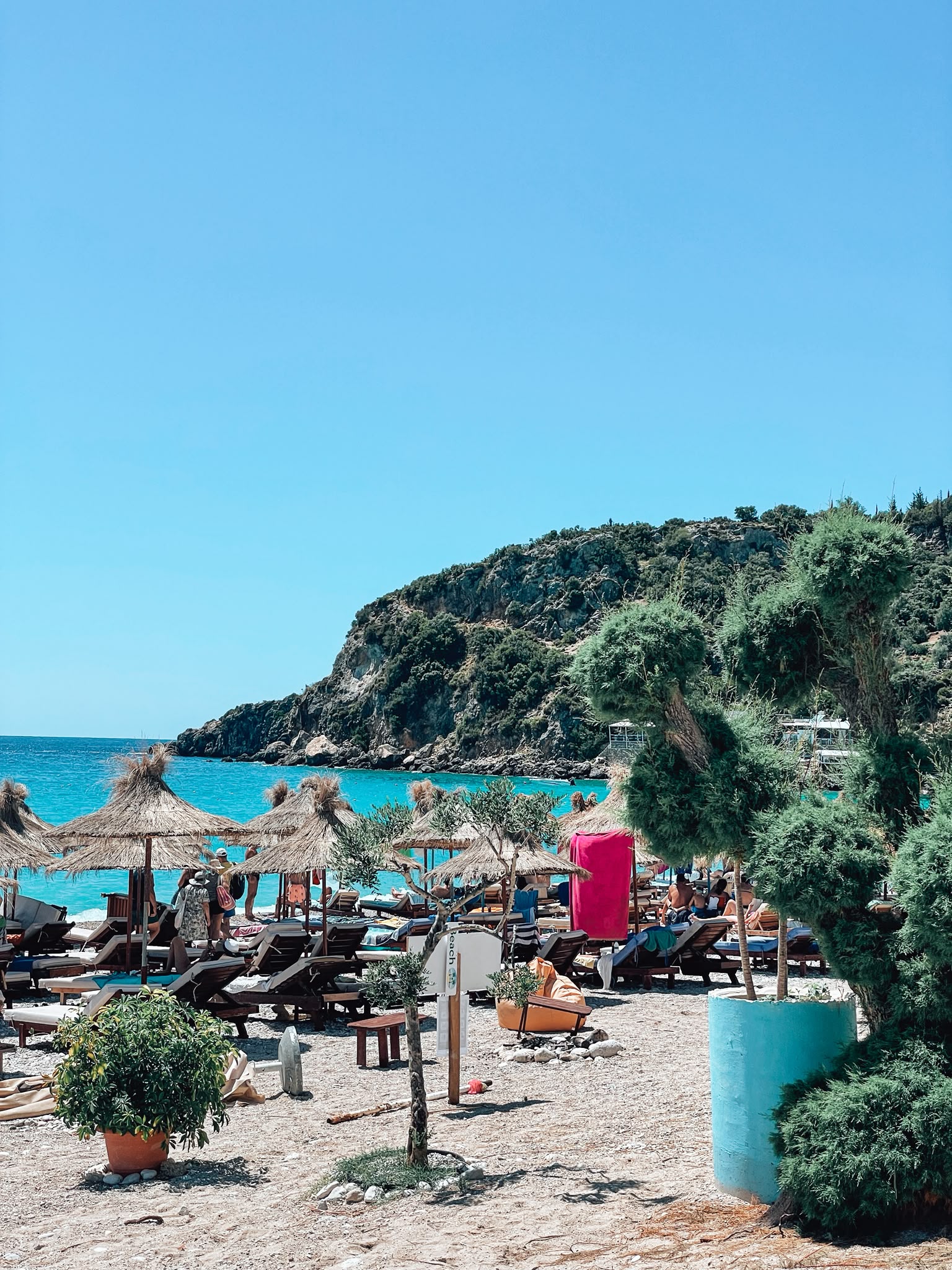
I’ve seen Livadhi early in the morning when it feels almost open, with wide stretches of sand, calm water, and only a few people setting up for the day. Come back a few hours later, and it’s a completely different place, lined with umbrellas and full of movement.
Spile is the opposite; it’s the easiest beach to reach, right next to town, which also makes it the default choice. If you’re not planning carefully, this is where you’ll probably end up. It’s convenient, but rarely quiet for long.
Potam sits somewhere in between. It doesn’t shift as dramatically as the others, but timing still defines the experience; early morning and late afternoon are when it feels most relaxed.
And then there’s Gjipe, which feels like a reset button entirely. The effort to reach it filters out most of the crowds, so even in peak season it often feels like a different world compared to the main beaches.
If you want to explore more stunning coastline spots like this, here’s a guide to the best beaches in Albania for every type of traveler.
Some of the main beaches you’ll likely end up at feel completely different depending on timing.
Livadhi is the most obvious example. I’ve seen it early in the morning when it feels open, calm, and almost empty, and then again later in the day when it’s so packed with umbrellas that it barely resembles the same place.
Spile is the easiest to reach since it sits right next to town, which is exactly why it gets busy so quickly. It’s the kind of beach you end up at by default, especially if you’re not planning too much.
Potam sits somewhere in between. It doesn’t usually feel as intense as Spile, but it still changes a lot depending on the time you arrive; early mornings and late afternoons make all the difference.
And if you want something quieter entirely, most people end up using Himarë as a base and heading out toward places like Gjipe, where the effort to reach it naturally filters out the crowds.
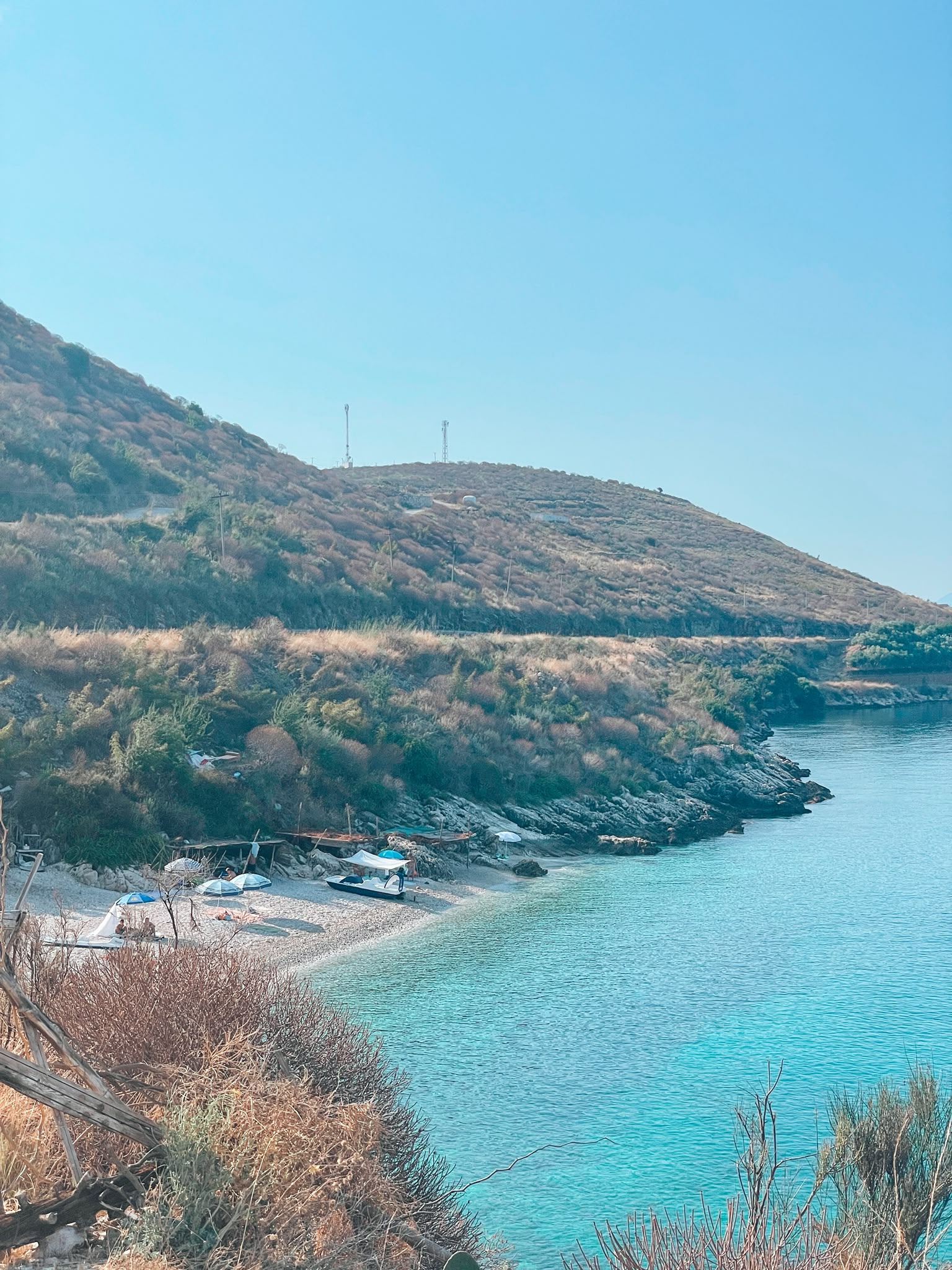
If you want a break from the crowds entirely, it’s worth using Himarë as a base and heading out to quieter nearby spots. One of the most popular day trips is Gjipe Beach, which feels more remote and requires a bit more effort to reach, but rewards you with a more rugged and less crowded setting compared to the main beaches.
In peak season, the difference between a crowded beach day and a peaceful one often comes down to timing more than location.
How to Avoid the Worst of Peak Season Crowds
One of the simplest things I learned in Himarë is that timing can completely change your experience. I remember one morning deciding, almost accidentally, to go to the beach at around 8 am. The same stretch of coastline I had seen packed the day before was suddenly quiet, with only a few early swimmers and fishermen out. It honestly felt like I had the place to myself.
That small adjustment made me rethink how I experienced peak season entirely.
If you want to make the most of summer here without feeling overwhelmed, the first rule is simple: go early or go late. The window between around 11 am and 4 pm is when beaches are at their busiest, so shifting your beach time outside of that immediately improves your experience.
The biggest difference I noticed wasn’t the beach; it was where I stayed. Even a 10-minute move outside the center completely changed the pace of the day.
Suddenly mornings were quieter, parking wasn’t stressful, and I wasn’t starting the day already in traffic.
Renting a scooter is another game-changer. It gives you access to smaller coves and less crowded spots along the coast that most day-trippers never bother to explore.
If you have flexibility, weekdays are noticeably calmer than weekends, when both local and international visitors tend to converge on the beaches at the same time.
And finally, booking accommodation early is one of the most underrated ways to reduce stress. It doesn’t just save money; it also gives you better location options, which shapes your entire experience once you arrive.
Himarë in Peak Season vs Shoulder Season (Quick Comparison)
I noticed the contrast between seasons in Himarë most clearly when I returned in a different month and visited the exact same beach I had been to in July. In peak season, it had been full of umbrellas, movement, and noise. In shoulder season, it felt almost unrecognizable, quiet, spacious, and slow in a way that made me want to stay longer just to absorb it.
The first time I came in July and then again later in the season, I honestly thought I was in a different place. Same beaches, same town, but completely different rhythm.
In peak summer, everything feels louder, fuller, faster. By September, it slows down enough that you actually notice the coastline again.
I remember thinking June felt like a completely different version of Himarë. The same beaches, the same town, but everything felt softer, quieter, like there was more space to breathe.
It still had energy, but without the pressure of peak summer crowds, it felt more breathable, like everything had just a bit more space to exist.
July and August are when everything is at its busiest: the hottest weather, fullest beaches, and highest prices. September, on the other hand, starts to soften again. The sea is still warm, but the crowds thin out and the pace slows noticeably.
Water temperature stays pleasant throughout the summer, but crowd levels shift dramatically between these months. In peak season, beaches are social and busy; in shoulder season, they feel more open and relaxed.
Prices follow the same pattern. Accommodation and services are at their highest in July and August, while June and September often offer better value without sacrificing too much in terms of weather.
Overall, the vibe changes from energetic and social in peak season to calm and spacious in shoulder season.
Final Verdict: Is Himara Worth Visiting in Peak Season?
Standing on the beach in Himarë at sunset after a full day in the middle of summer, I remember thinking that the crowds didn’t really disappear, but they also didn’t matter as much as I expected. The water was still warm, the sky was turning gold, and the coastline had that unmistakable Albanian Riviera glow that makes the whole place feel almost unreal.
So is Himara worth visiting in peak season?
Honestly, I kept coming back to the same thought: it’s not about avoiding the crowds here; it’s about finding your version of the day that still feels like Himarë underneath all of it.
Yes, if you want energy, guaranteed sunshine, and a lively beach destination where everything is open and alive. Peak season gives you the best version of the weather and the most activity, but it also comes with noise, crowds, and higher prices.
No, if what you’re looking for is quiet beaches, slow mornings, and that feeling of discovering a place before everyone else arrives. In that case, shoulder season will suit you much better.
The most honest answer sits somewhere in between: it really depends on how you travel.
Peak season in Himarë is not about escaping crowds; it’s about choosing the right moments within them.