
When you grow up Albanian, the Riviera isn’t some exotic place you dream about, it’s just there.
A few names you’ve heard a hundred times: Dhërmi, Himara, Ksamil. But after living abroad for years, I realized I’d never actually experienced them properly. So one summer, I decided to go back, not as a local visiting family, but as a traveler with a week, a car, and zero plans beyond “let’s see what everyone’s been talking about.”
And that’s when Albania completely surprised me.
The cliffs above Gjipe looked like they belonged in Greece. The sea in Ksamil felt like the Caribbean. And the prices? Let’s just say I stopped converting everything into euros pretty fast.
Yes, calling it the “Albanian Riviera” sounds like a marketing move, but the beaches? 100% the real deal.
This post isn’t another brochure-style itinerary or Instagram checklist. It’s a no-fluff, experience-backed guide to how to spend one week in the Albanian Riviera, with real beach days, local meals, and those hidden corners that still feel untouched.
So if you’re ready for turquoise water, winding coastal roads, and a side of Albania most travelers don’t expect, and you’re planning one week in the Albanian Riviera, this mix of beaches and hidden towns gives you a bit of everything, from Ksamil’s turquoise bays to Gjirokastër’s cobbled alleys.
Day 1: Getting to Saranda (And Why You’ll Probably Go Through Corfu)
Even as an Albanian, I’ll admit it, the easiest way to reach the Riviera isn’t through Albania at all.
Most travelers (and locals who know better) fly into Corfu, Greece, then take a 30-minute ferry to Saranda. It’s faster, cheaper, and honestly way more scenic than the long drive down from Tirana.
How to Get to Saranda from Corfu (And Why It’s the Best Route)
The first time I did it, I landed in Corfu on one of those blindingly bright afternoons where everything smells like sunscreen and sea salt. The ferry terminal wasn’t exactly next door to the airport, so I found myself dragging my suitcase through the heat, muttering, “This better be worth it.”
But the moment the ferry left the port, the sea turned turquoise, the wind picked up, and Albania appeared across the water, close enough to feel like a secret waiting to be rediscovered. By the time we pulled into Saranda, I was grinning like someone coming home to a place they didn’t realize they’d missed.
Curious about the exact ferry schedules, ticket tips, and insider secrets for making the trip from Corfu to Saranda seamless? Don’t miss my full guide: Corfu to Saranda Ferry: Schedules, Tickets & Insider Tips, your step-by-step roadmap to an unforgettable journey!
First Impressions
Saranda can be a little chaotic, with cars honking, waiters calling you in for lunch, and kids running along the promenade, but there’s warmth behind it. It’s not polished, but it’s alive.
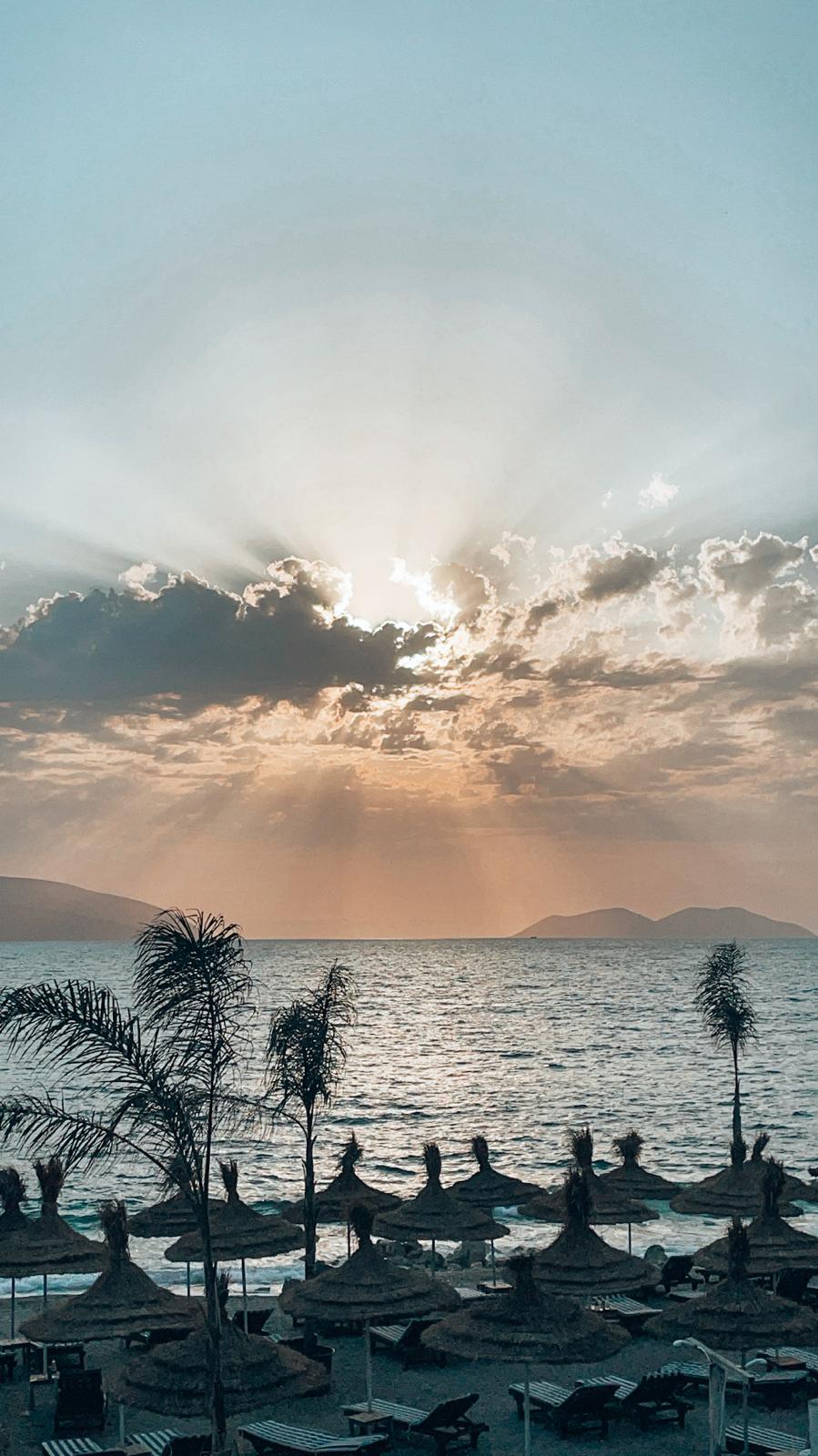
If you arrive in the afternoon, it’s worth spending the night here. Watch the sunset from Lëkurësi Castle, grab a seafood dinner by the sea, and take it easy before heading south. If you land early, you can go straight to Ksamil beach, which is just a 20-minute drive (and a whole different vibe).
Is Albania Worth Visiting? My Honest Guide.
Local Tips
Money exchange: Skip the kiosks at the port; the rates are awful. Walk five minutes inland to a Këmbim Valutor (exchange office) for a fair rate. Read my full guide to using Lek in Albania here.
Food tip: Don’t eat at the first row of restaurants near the ferry terminal. They’re convenient but overpriced. Walk down the promenade to Taverna Fish Filipi or Mare Nostrum, where locals actually eat.
Getting to Ksamil beach: If you’re not renting a car, the local bus to Ksamil runs about every 30 minutes (fare around €1). A taxi should cost €10 – 15, agree on the price beforehand.
Where to stay (if overnighting):
Luxury: Santa Quaranta Premium Resort, modern, beachside, and surprisingly affordable off-season.
Budget: Buzë Boutique Hotel, great value, sea views, modern rooms.
Mid-range: Bougainville Bay Hotel, beautiful infinity pools, and a quick walk to town.

Day 2-3: Ksamil Beach Guide – Boats, Bars & That “Wait, This Is Albania?” Moment
If there’s one place that makes people rethink everything they thought they knew about Albania, it’s Ksamil.
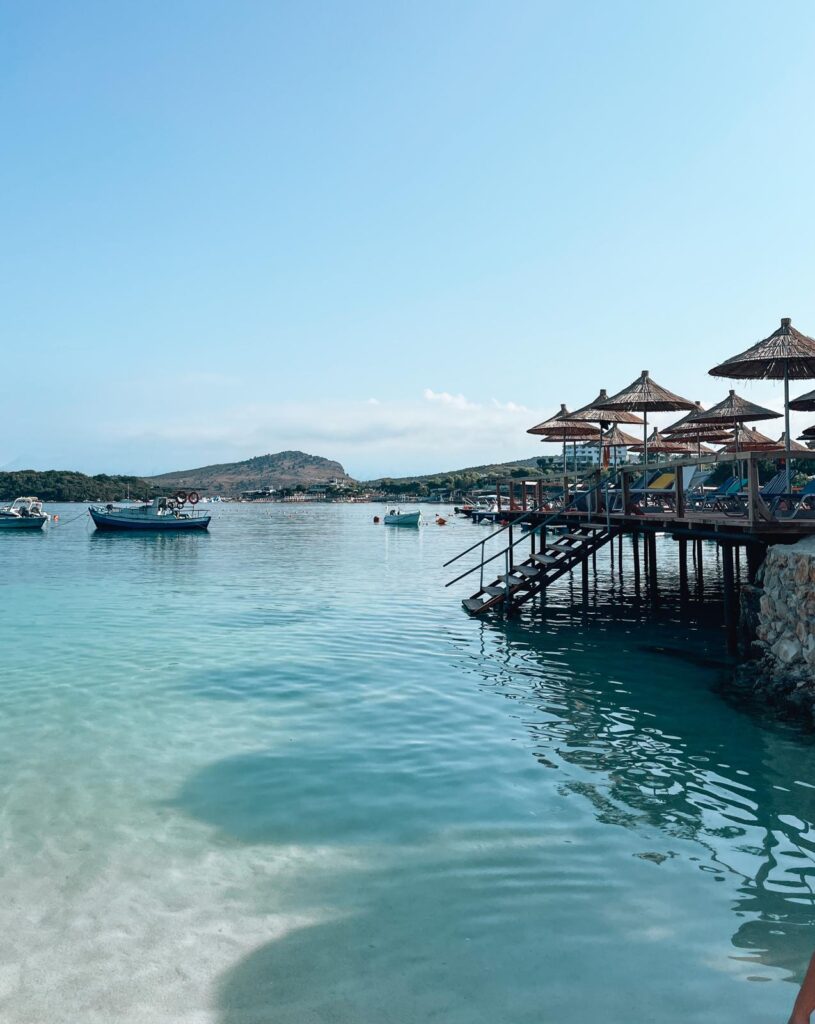
Ksamil beach is easily one of the most photogenic spots on the Riviera, white sand, turquoise water, and those little islands offshore that look like they belong in the Caribbean.
Every time I post a photo from here, I get the same DMs:
“Wait, this is Albania?”
Yes. This is Albania, and it’s the part that makes you question why you ever paid triple the price to sit on a crowded Greek beach.
That first wow moment
I’ve been coming to the Riviera since I was a kid, but nothing prepared me for seeing Ksamil as an adult, early morning, before the umbrellas open, when the water is so clear you can count the pebbles beneath your feet. The beaches curve like tiny lagoons, the islands shimmer in the distance, and even locals stop to take photos. It’s the kind of place that makes every Albanian road trip feel worth it, no matter how many winding coastal turns it takes to get here.
If you can, spend at least two full days here. One for pure lazy beach time, and one for exploring a few hidden spots nearby (and trust me, they’re worth it).
Best Beaches in Ksamil
- Bora Bora Beach – yes, it’s touristy, but it earns the hype. Great service, cocktails, and calm water.
- Lori Beach – my personal favorite. Smaller, quieter, and locals love it for a reason.
- Pulebardha Beach – a short drive away, rocky but stunning, with sunset views that look painted.
- Ksamil Islands – rent a paddle boat or small boat and explore the tiny islets offshore; it feels like island-hopping without ever leaving Albania.
My beach bar mishap (because of course there was one)
On my second day, I tried to “be spontaneous” and skipped reserving sunbeds, big mistake. By 10 a.m., every lounger was taken, and I ended up sitting on a beach towel between two families blasting different music. But it turned out fine, I made friends with the bartender at Coco Beach, who handed me a cold beer and said, “You’re better off here anyway.” He was right.
Food & Drinks
Seafood here is next level.
If you want to do it right, head to Guvat Restaurant, order grilled octopus, white wine, and watch the sun melt into the water. For something casual, Korali Beach Bar does great calamari and has proper chill vibes in the evening.
And please, skip the overpriced beachfront pizza places, they look nice but taste like regret.
Where to Stay in Ksamil
- Budget: Vila Ergys, clean rooms, friendly owners, and walking distance to the beach.
- Mid-range: Blue Eye Hotel, stylish, with sea views and parking (rare win).
- Luxury: Hotel Mira Mare, if you want that “I could stay forever” balcony view.
Local Tips
Reserve your beach spot: In July and August, book sunbeds a day ahead or arrive before 9 a.m.
Cash is king: Most beach bars don’t take cards, and ATMs in Ksamil sometimes run out of cash, bring enough lek from Saranda.
Boat rentals: Around €30-40 for two hours, totally worth it for island hopping.
Day trip idea: Combine Ksamil with Butrint National Park (a UNESCO site only 10 minutes away). It’s one of Albania’s best-preserved ancient cities, think ruins, forests, and quiet trails with lagoon views.
Day 4: Butrint & The Blue Eye – How to Get There + Why They’re Worth It
If Ksamil is where you fall in love with Albania’s beaches, Butrint is where you realize how deep the country’s history runs.
It’s only a 10-minute drive from Ksamil, but it feels like you’ve stepped into another world, one where ancient olive trees whisper above Roman mosaics and the air smells faintly of salt and pine.
If you’re wondering how to get to Butrint from Ksamil, it’s just a short 10-minute drive or local bus ride south.
Morning: Butrint – The Ruins That Sneak Up on You
Butrint is one of those places that doesn’t look like much when you first walk in, until it slowly reveals itself.
You start with a few stone walls, then suddenly you’re staring at a Roman amphitheater, a Venetian tower, and Greek columns all layered together like a timeline someone forgot to organize.
I’ve visited more ruins than I can count, but there’s something quietly magical about Butrint. Maybe it’s the light filtering through the trees, or the frogs croaking by the water, or the way history just sits there, unbothered.
Pro Tip: Go early, ideally before 9 a.m. Tour buses usually arrive by 10, and by then, the peaceful echo of the ruins turns into selfie chaos.
Entrance fee: Around €6
Time needed: 1.5 – 2 hours is perfect
Afternoon: The Blue Eye (Syri i Kaltër), Magical, Freezing & Just Tourist-Heavy Enough
After Butrint, head inland toward The Blue Eye, about a 45-minute drive through winding green hills.
You’ll know you’re close when the air feels cooler and you start seeing signs for “Syri i Kaltër” (and small cafés selling wild honey).
When I first visited, I thought, How special can a hole in the ground really be? Then I saw it, a pool of deep turquoise and sapphire water so clear it looks unreal. The spring is over 50 meters deep, but you can still see straight to the bottom.
And yes, it’s freezing. I dipped my toes in once and instantly lost feeling below the ankles. Some brave souls jump in, and I just cheered for them and ordered a coffee instead.
Was it worth the detour? Honestly, yes. Not for hours, but for that surreal, untouched beauty that photos can’t quite capture.
Pro Tip: Avoid midday (11 a.m. – 2 p.m.) when the parking lot fills with buses. Go before 10 or after 4 for that peaceful, fairytale vibe.
Day 5: Gjirokastër Travel Guide – Castles, Cobbled Streets & Coffee with a View
Leaving the coast for Gjirokastër feels like stepping into a history book, but one where people still hang laundry from Ottoman-era balconies and sip coffee beneath castle walls.
The drive from Ksamil takes about 1.5 hours, winding through hills and olive groves before you suddenly see the city clinging to the mountain like it was carved there.
Top things to do in Gjirokastër include exploring the fortress, wandering the old bazaar, and sipping Turkish coffee with a view, all wrapped in that timeless Ottoman charm that makes the city feel like a movie set.
The Climb (Yes, You’ll Feel It)
Let’s get this out of the way: Gjirokastër is built on a hill, and those cobblestones are no joke. Wear proper shoes.
I once trusted Google Maps to lead me to my guesthouse and ended up halfway up a donkey path, out of breath, with a local woman laughing and pointing me back to the “real road.” Lesson learned, but honestly, that’s part of the charm of any Albanian road trip, where the wrong turn usually leads to the best story.
What to See
Gjirokastër Fortress – The star of the show. The views over the Drino Valley are unreal, especially at sunset. Inside, there’s a mix of history, random artifacts, and one abandoned American plane that somehow ended up here (no one really agrees on how).
Old Bazaar – Stroll through the narrow streets lined with handmade rugs, silver jewelry, and copper crafts. Even if you’re not shopping, it’s worth it for the atmosphere alone.
Coffee with a View: My favorite spot was Kujtimi Café, tucked into a stone terrace overlooking the old town – the kind of place where you order one espresso and stay an hour.
Where to Stay
If you can, spend the night inside the old town – it’s the kind of place that glows at sunset and goes quiet after dark, like a living museum.
Luxury: Argjiro Hotel – modern comfort with a rooftop view.
Budget: Stone City Hostel – friendly, cozy, perfect for solo travelers.
Mid-range: Hotel Gjirokastra – traditional stone house, amazing breakfast.
Day 6: Albanian Road Trip – Driving the Llogara Pass to Himarë or Borsh
No matter how many times I’ve done it, the Driving the Llogara Pass on an Albanian Road Trip ustill gives me goosebumps. Driving the Llogara Pass feels like the highlight of any Albanian road trip, with dramatic cliffs and endless sea views that make you pull over every few minutes just to take it in.
It’s one of the most stunning drives in the Balkans, hairpin turns, wild mountain cliffs, and that first glimpse of the Ionian Sea glittering below like a postcard.
Leaving Gjirokastër early, you’ll zigzag toward the coast, climbing through Llogara National Park, where pine trees smell like summer and goats occasionally wander across the road (Albania in one sentence).
I still remember my first drive here, windows down, music blasting, my friend trying not to get car sick while I kept yelling, “Look at that view!” every two minutes. It’s dramatic, yes, but totally worth every twist and turn.
Stop for Lunch with a View
Halfway through the pass, there’s a small cluster of restaurants and viewpoints. Llogara Tourist Village or Alpine Hotel Restaurant are perfect for grilled lamb and fresh yogurt with panoramic views. Trust me, you’ll need the break before tackling the descent.
Where to Stay: Himarë vs. Borsh
Once you reach the coast, you’ve got two great choices for your final nights:
Himarë: A laid-back seaside town with cafés, a long beach promenade, and a mix of locals and travelers. Great if you want to relax with a bit of nightlife.
Stay at Rea Boutique Hotel — modern rooms, sea views, and a short walk to the beach.
Borsh: Quieter, more rural, and spread out along a 7 km beach. Think olive groves, crystal water, and no crowds.
Stay at Blue Days Hotel or Guesthouse Adriatik for balcony views and family-run warmth.
Local Tip: If you want the best ocean view without the Instagram crowd, choose a guesthouse on the hills above Himarë, you’ll get that endless sea horizon with zero noise.
Day 7: Back to Saranda (But Stop for One Last Swim First)
It’s your final day, but don’t rush it, the Riviera’s beaches deserve one more morning.
If you stayed in Himarë, start the day at Livadhi Beach for a quiet swim before the drive back. From Borsh, stop at Qeparo Beach, a dreamy curve of turquoise water that’s somehow still under the radar.
The Drive Back
The ride to Saranda takes about 1.5 hours, but you’ll want to stop at least once, either for a coffee with a sea view or one last photo at Llogara Pass. Return your rental car in town, grab an ice cream on the promenade, and prep for the ferry to Corfu.
Tips I Wish I Knew Before Going
Even though I’m Albanian, traveling the Riviera like a visitor taught me a few lessons I wish I’d known before setting off, the kind that make a smooth trip go from “okay” to “I never want this summer to end.”
Getting a Local SIM Card
Don’t rely on roaming, even EU plans don’t always cover Albania.
Buy a prepaid SIM from Vodafone or One Albania as soon as you arrive. You’ll get around 100 GB for €25, and coverage is solid almost everywhere, even in remote beach towns. It also saves you from Wi-Fi roulette in guesthouses. Read my full guide here.
Card vs. Cash
Albania still runs mostly on cash, and I wrote a full guide about this.
You can use cards in hotels and bigger restaurants, but small cafés, beach bars, and gas stations often prefer lek. Exchange money at a Këmbim Valutor in town (never at the airport or port). ATMs work fine, but can charge random fees, so withdraw larger amounts less often.
Driving Realities (What Google Maps Gets Wrong)
Google Maps in Albania is both your best friend and your worst enemy.
It’ll show you the right route, until it suddenly decides that a goat trail is a shortcut. When in doubt, ask locals or follow the main road signs instead of the algorithm.
And take your time: distances here look short on the map but twist through mountains and villages.
Language & Friendliness
Most young Albanians speak English or Italian, especially along the Riviera. Even when they don’t, people will go out of their way to help you, it’s kind of a national habit.
Don’t be surprised if someone literally walks you to your destination instead of just giving directions.
Safety (Especially for Solo Travelers)
Albania is one of the safest countries in Europe, even for solo travelers.
You’ll find people genuinely curious and protective toward visitors. That said, use common sense: avoid leaving valuables in cars or unattended on beaches, and you’ll be fine.
I’ve driven alone, stayed in small villages, and walked around after midnight — and always felt safe.
Bonus: Is Albania the New Greece?
People ask this all the time, “Is Albania the new Greece?”
Not really. And that’s exactly why you should come now.
Greece has the name, the islands, and the crowds. Albania has the same turquoise water, half the price, and a fraction of the people.
You’ll still find whitewashed villages, grilled octopus by the sea, and sunsets that stop you in your tracks, but you’ll also find beaches where there’s no one else around, locals who invite you for coffee, and roads that feel like little adventures.
Right now, Albania sits in that sweet spot between discovered and underrated. It’s still raw, still real, and still changing fast.
In a few years, the secret might be out.
So if you’re dreaming of the Mediterranean, but want something more personal, more affordable, and more unexpected, this is it.
Plan a full week in the Riviera with beach spots and hidden gems, and you’ll see why everyone who comes here leaves saying the same thing:
“I can’t believe this is Albania.”
Don’t overplan. Some of my best moments came from random detours, a beach I spotted from the road, a roadside café, a conversation with a local.
After spending one week in the Albanian Riviera, I realized how underrated this stretch of coast really is.
Final Thoughts
When I started this trip, I thought I knew Albania. But traveling the Albanian Riviera for a full week made me see it differently, wild, generous, and full of contrasts. It’s a place where you can swim in Caribbean-colored water, hike through ancient ruins, and eat seafood that costs less than your morning coffee in Italy.
If you’re planning your own adventure, plan a full week in the Riviera with beach spots and hidden gems like these. You’ll leave sunburned, full, and maybe a little obsessed, like I did.
💙 Don’t leave without doing this:
- Swim at Gjipe Beach (if you can make the hike or 4×4 down)
- Watch the sunset from Lëkurësi Castle
- Eat grilled octopus by the sea in Ksamil
- Drive the Llogara Pass with the windows down and your favorite playlist on
Because when Albania gets under your skin, it never really leaves.