
When I first heard the legend that the Blue Eye Saranda could grant wishes, I was skeptical. Locals spoke about it almost like a living spirit, a deep, sapphire spring said to have no bottom and mysterious powers. It sounded like one of those stories travelers tell over raki in a village taverna.
After traveling through southern Albania extensively, from Gjirokaster’s cobbled lanes to Saranda’s turquoise bays, I finally decided to visit Syri i Kalter, and here’s the truth behind the hype: it’s even more mesmerizing than it looks in photos.
If you’re planning a broader trip, you might want to map this stop into a full Albania itinerary so it fits naturally between Gjirokastër and the Riviera.
This guide covers everything you need to know before visiting the Blue Eye Saranda, including how to get there, when to go, what to expect, and insider tips most tourists miss. If you’re planning a trip to southern Albania, don’t skip it, but go prepared.
What is Syri i Kalter (The Blue Eye)?
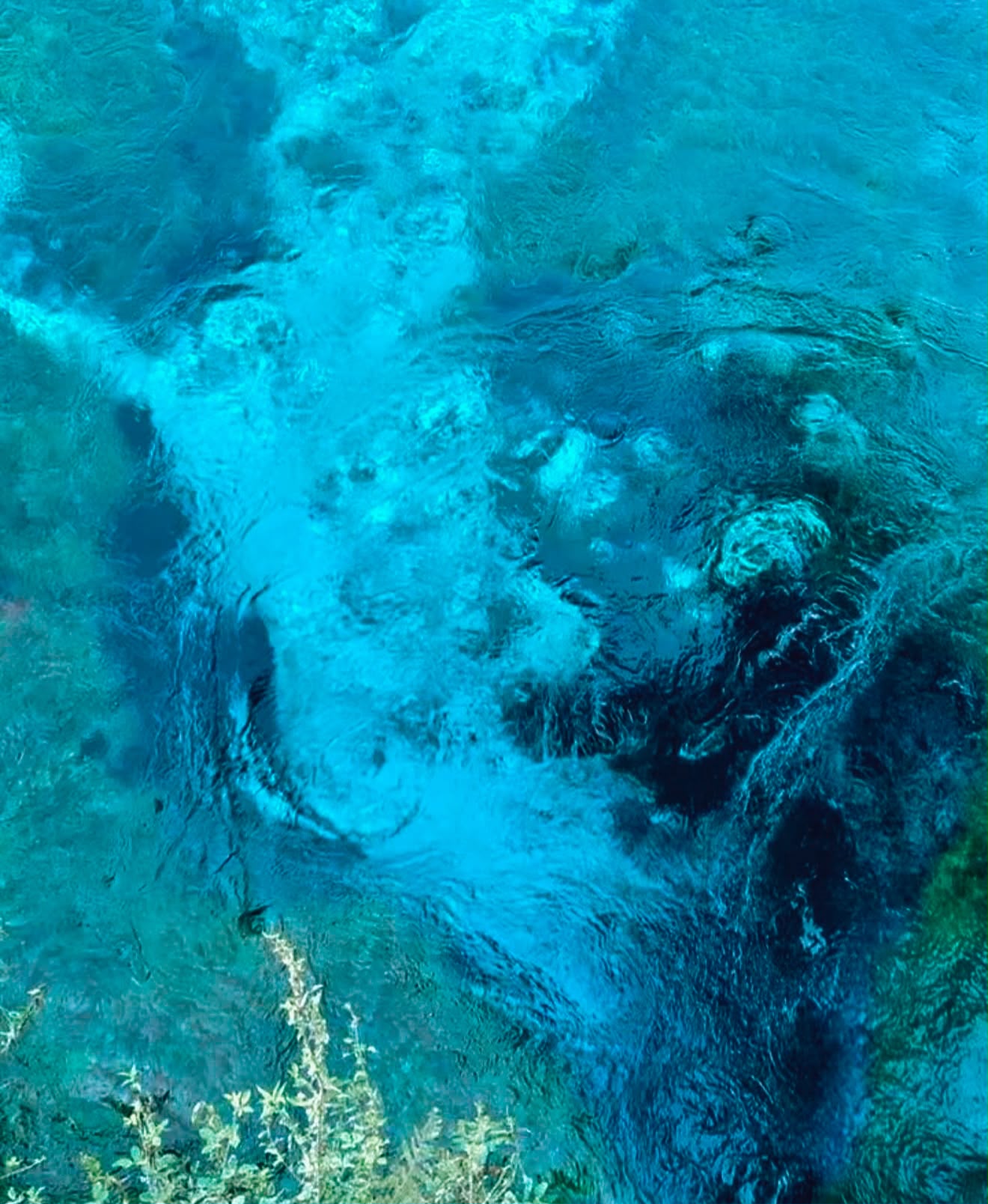
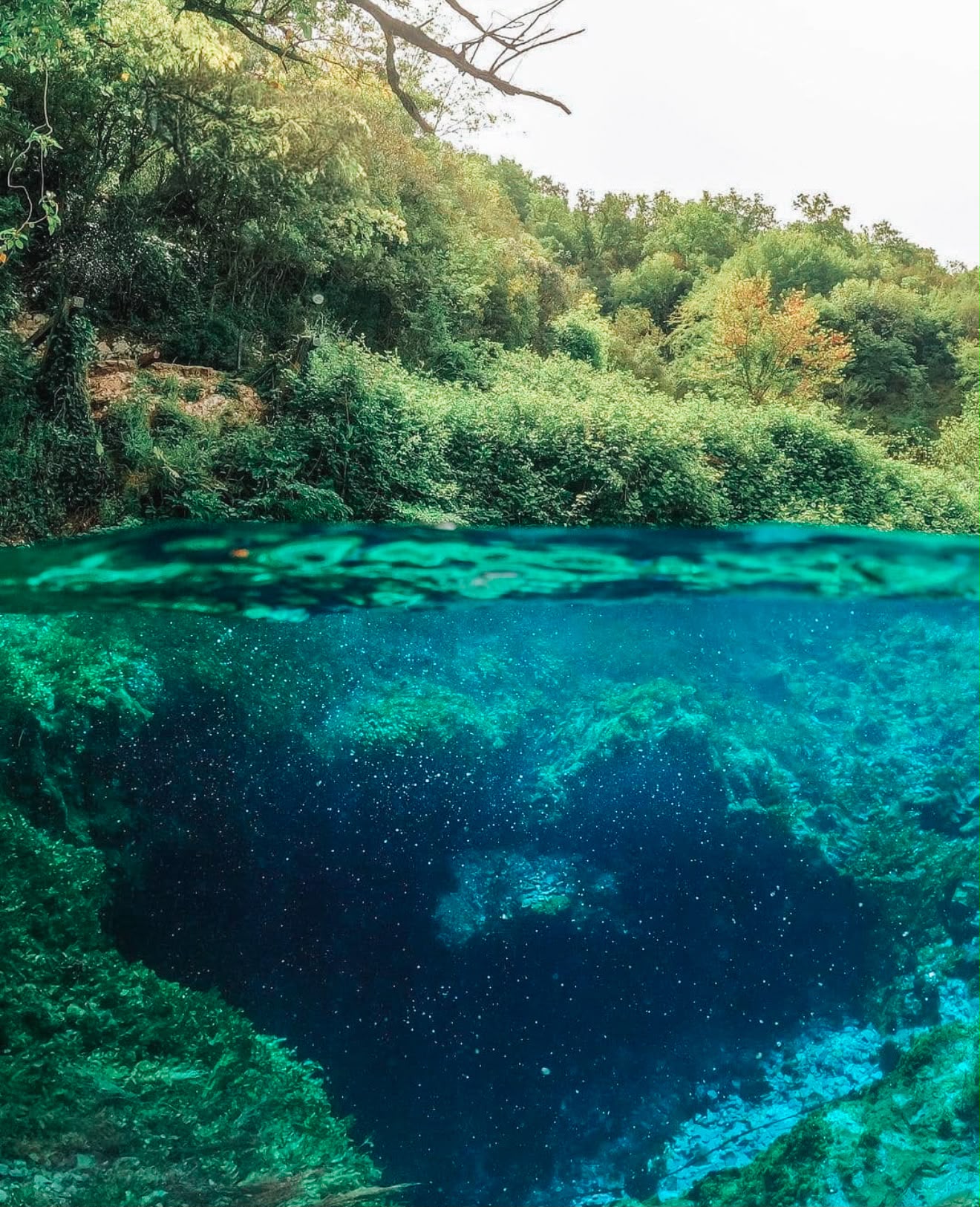
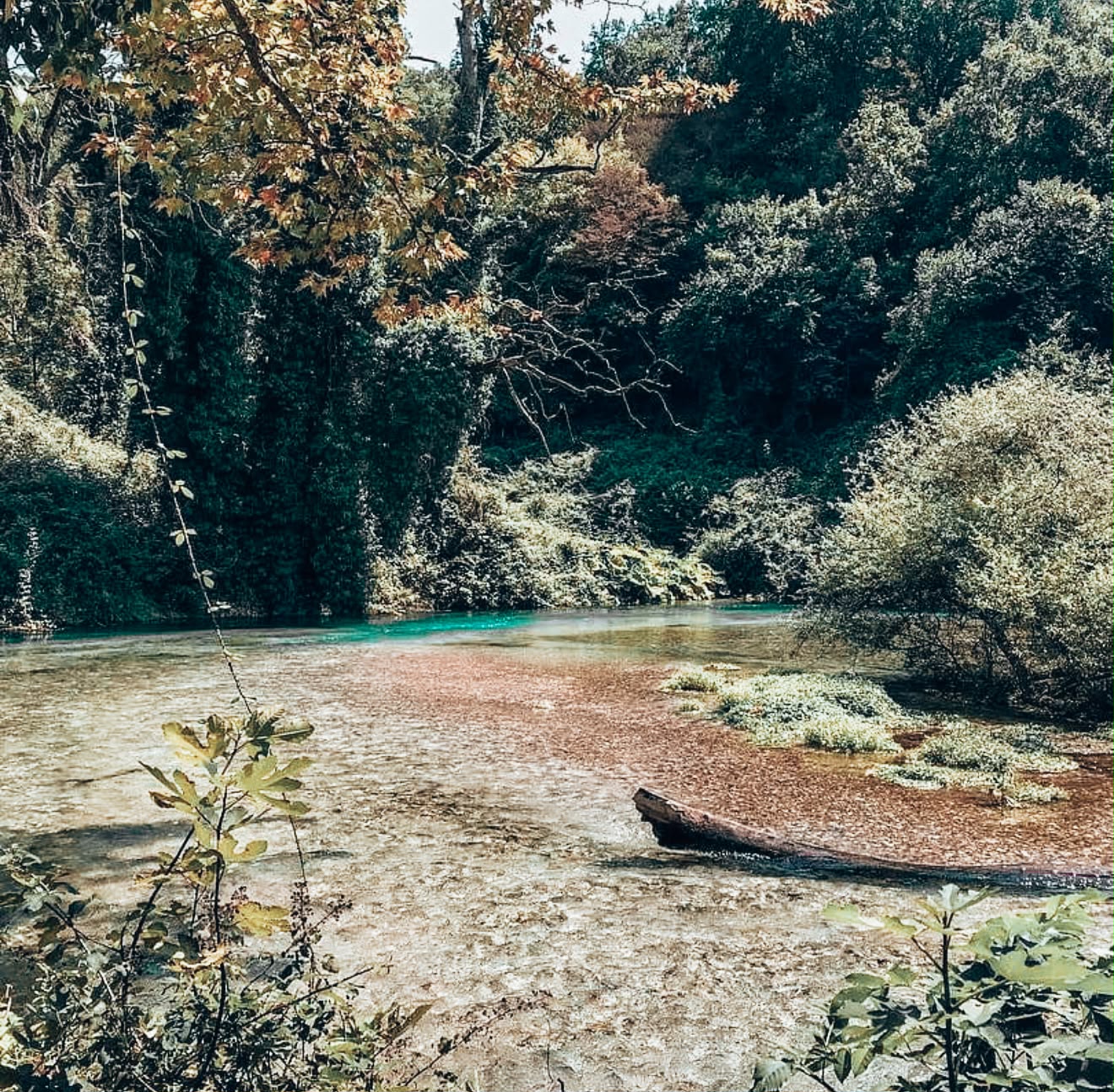
The Blue Eye, or Syri i Kalter in Albanian, is a natural freshwater spring whose colors are so vivid they seem almost unreal, a deep indigo “pupil” surrounded by turquoise ripples that sparkle in the sunlight. From above, it truly looks like a human eye gazing up from beneath the earth.
According to local legend, the spring was once the eye of a dragon that lived beneath the mountains. When the creature was slain, its piercing blue eye remained, becoming the source of endless, crystal-clear water that locals say can grant wishes if you toss a coin into its center.
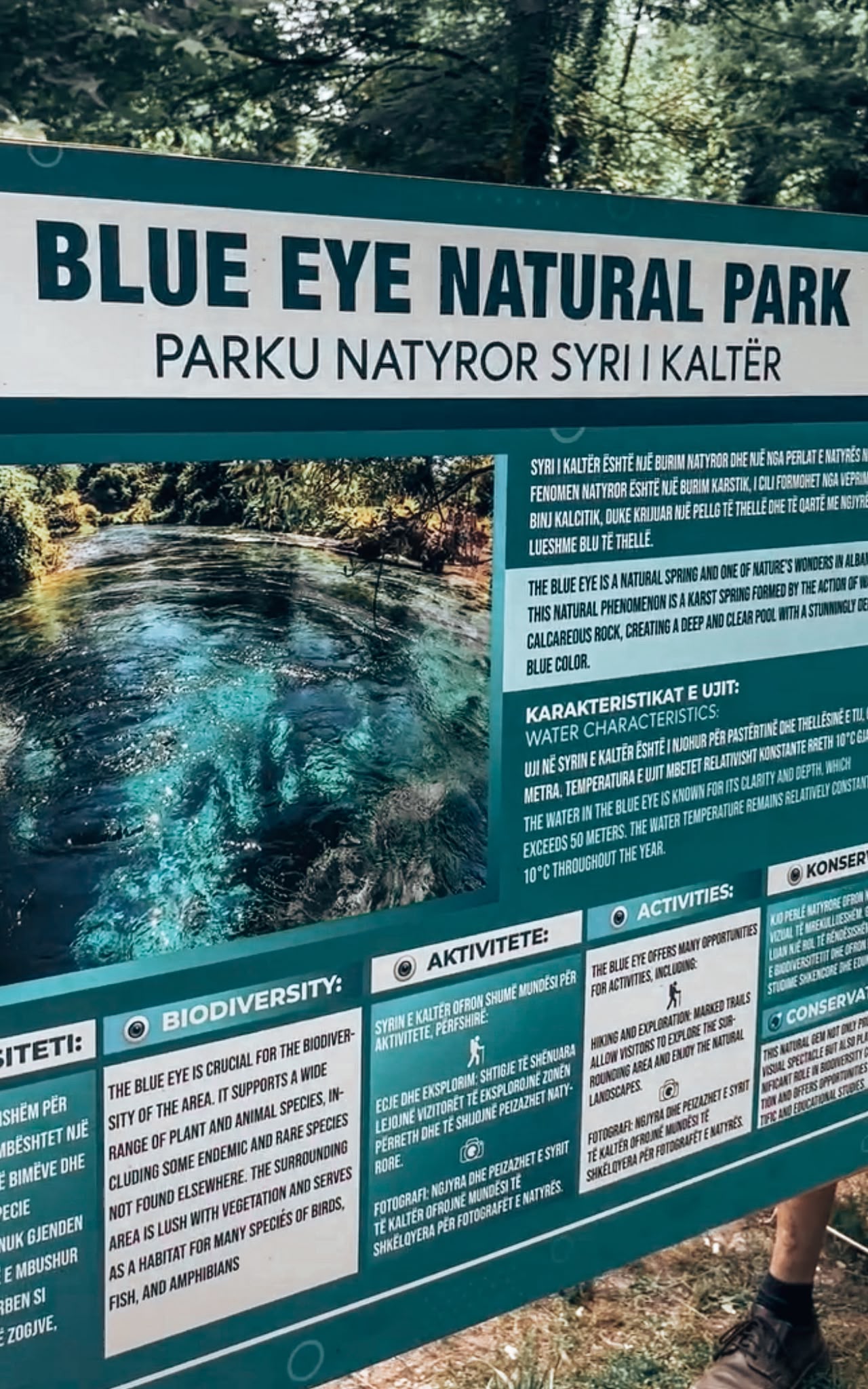
Scientifically, the Blue Eye is a karst spring, where underground water pushes up from a depth of over 50 meters (though divers haven’t yet reached the bottom). The outflow is astonishing, around 18,000 liters per second, feeding the Bistricë River and keeping the water ice-cold year-round.
The first time I saw it, I just stood in silence. Photos had made it seem beautiful, but in person, the intensity of the color almost didn’t look real. The water shimmered like liquid glass, and even on a hot summer day, a cool mist floated above it. I didn’t make a wish, but for a moment, it felt like the kind of place where magic might actually exist.
Where is the Blue Eye Saranda Located? (Syri i Kalter Saranda)
There are actually two Blue Eyes in Albania, but the one everyone talks about, and the one you’re probably looking for, is the southern Syri i Kalter, located between Saranda and Gjirokaster.
📍 Coordinates: 39.9239° N, 20.1872° E
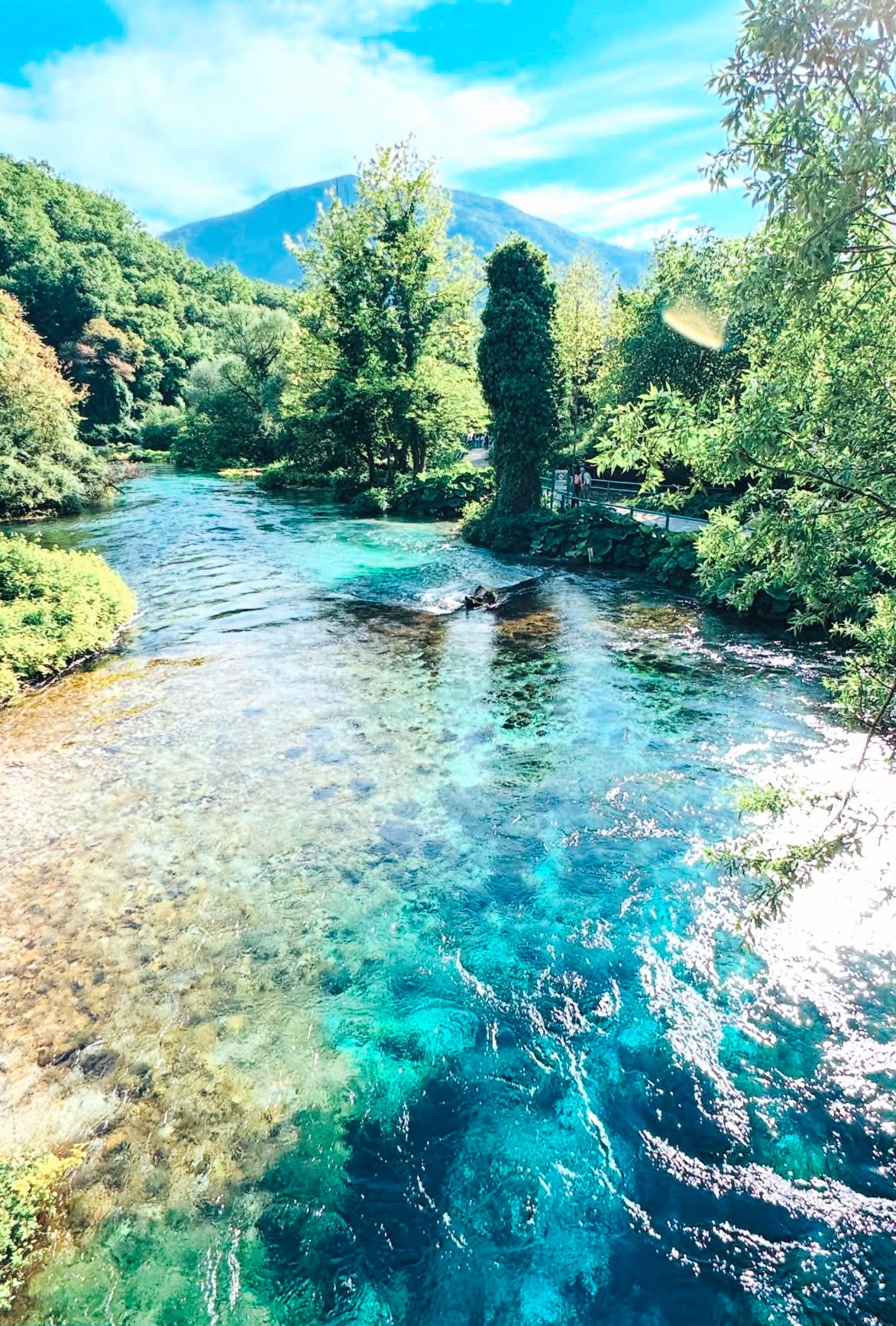
It’s about 20 km from Saranda, 40 km from Ksamil, and 35 km from Gjirokaster, making it an easy half-day trip from any of these towns. The drive takes you through olive groves and mountain valleys before descending into a forested reserve where the spring lies hidden among plane trees.
If you’re planning a southern Albania itinerary, Syri i Kalter fits perfectly between Gjirokaster and Saranda, especially if you’re traveling by car. I stopped here on my way back to the coast after exploring Gjirokaster, and it felt like the perfect nature break before the beaches.
Local tip: On your way back to Saranda, stop at Taverna Muzina or Blue Eye Oasis Restaurant, both just outside the park entrance. The trout here is caught fresh from the same spring, icy, tender, and grilled with olive oil and lemon. It’s one of those simple Albanian meals that tastes like summer itself.
How to Get to Syri i Kalter
By Car
Driving to the Blue Eye (Syri i Kalter) is by far the easiest and most flexible option, especially if you’re road-tripping through southern Albania.
From Saranda, it’s a 25-minute drive (20 km) heading north toward Gjirokaster. You’ll follow the SH99 road and see clear signs for Syri i Kalter shortly after the village of Muzina. The road is paved and in good condition, though it narrows a bit near the turnoff into the forest reserve.
From Ksamil, expect about 35 minutes, and from Gjirokaster, roughly 45 minutes.
Once you arrive, you’ll find a large parking area near the entrance gate. Parking costs around 100–200 lek, depending on the season. During July and August, the small lot fills up by 10:00 a.m., so it’s best to arrive early, not just to skip the crowds, but also to enjoy the mirror-like reflections on the water before the midday sun hits.
If you’re visiting in the afternoon, aim for after 5 p.m., when the day-trippers are gone, and the light turns golden across the spring.
If you’re planning to rent a car or road trip through the country, check my breakdown of how to get around Albania for road conditions, driving tips, and transport options.
By Bus or Shuttle
Getting to Syri i Kalter by public transport is possible but slightly tricky. From Saranda, you can take a local bus heading toward Gjirokaster, which passes near the Blue Eye junction. The fare is around 200–300 lek, and the ride takes about 30–40 minutes.
Ask the driver to drop you off at “Syri i Kalter”, most know exactly where that is. From the main road, it’s about a 2 km walk downhill through the forest to reach the spring (20–25 minutes). It’s a beautiful walk, but keep in mind there’s little shade, so bring water if you’re visiting in summer.
If you prefer not to walk, the KMG Shuttle service operates seasonally (June–September), connecting Saranda → Blue Eye → Gjirokaster with pre-set departure times. It costs slightly more (around 500–700 lek), but drops you right at the entrance gate, a huge bonus on hot days.
When I first visited, I took the local bus from Saranda and walked the last stretch, it was peaceful in the morning, with only birdsong and the sound of running water. But on the way back, the afternoon sun was brutal, so if you’re visiting mid-day, the shuttle or a car is definitely worth it.
By Taxi or Tour
If you’re short on time or don’t want to deal with bus schedules, taking a taxi or private driver is the most comfortable way to go.
A one-way taxi from Saranda costs about 2,000–2,500 lek (€20–25), while from Gjirokaster, expect to pay around 3,000–3,500 lek (€30–35).
For round trips, most drivers will wait for 1–1.5 hours while you visit (plenty of time to explore and grab a drink at the café). It’s best to agree on a fixed price before you go.
If you want a reliable option, I recommend booking through GetYourGuide’s Blue Eye half-day tour. They use verified local drivers and offer flexible pick-up points in both Saranda and Ksamil. (Affiliate-friendly note: these are great for readers who don’t want to drive.)
Entrance Fees and Opening Hours
The Blue Eye is part of a protected natural park, and there’s a small entrance fee: 50 lek per person (about €0.50). Payment is cash only, and it’s best to bring small bills, especially in summer, when the staff often can’t provide change.
If you’re unsure how money works here, including cash vs card usage, I break it down in Do You Need Lek in Albania.
Opening hours: officially 7:00 a.m. to 7:00 p.m., but early visitors often enter a bit before that. The main gate closes around sunset.
At the entrance booth, expect a simple setup, a small kiosk, friendly staff, and sometimes a short line in July and August. There are no card machines, and cell signal can be patchy, so don’t rely on mobile payments.
Once inside, it’s a short 10-minute walk along a shaded trail to the spring, passing picnic tables and a small café overlooking the river.
What to Expect on the Trail
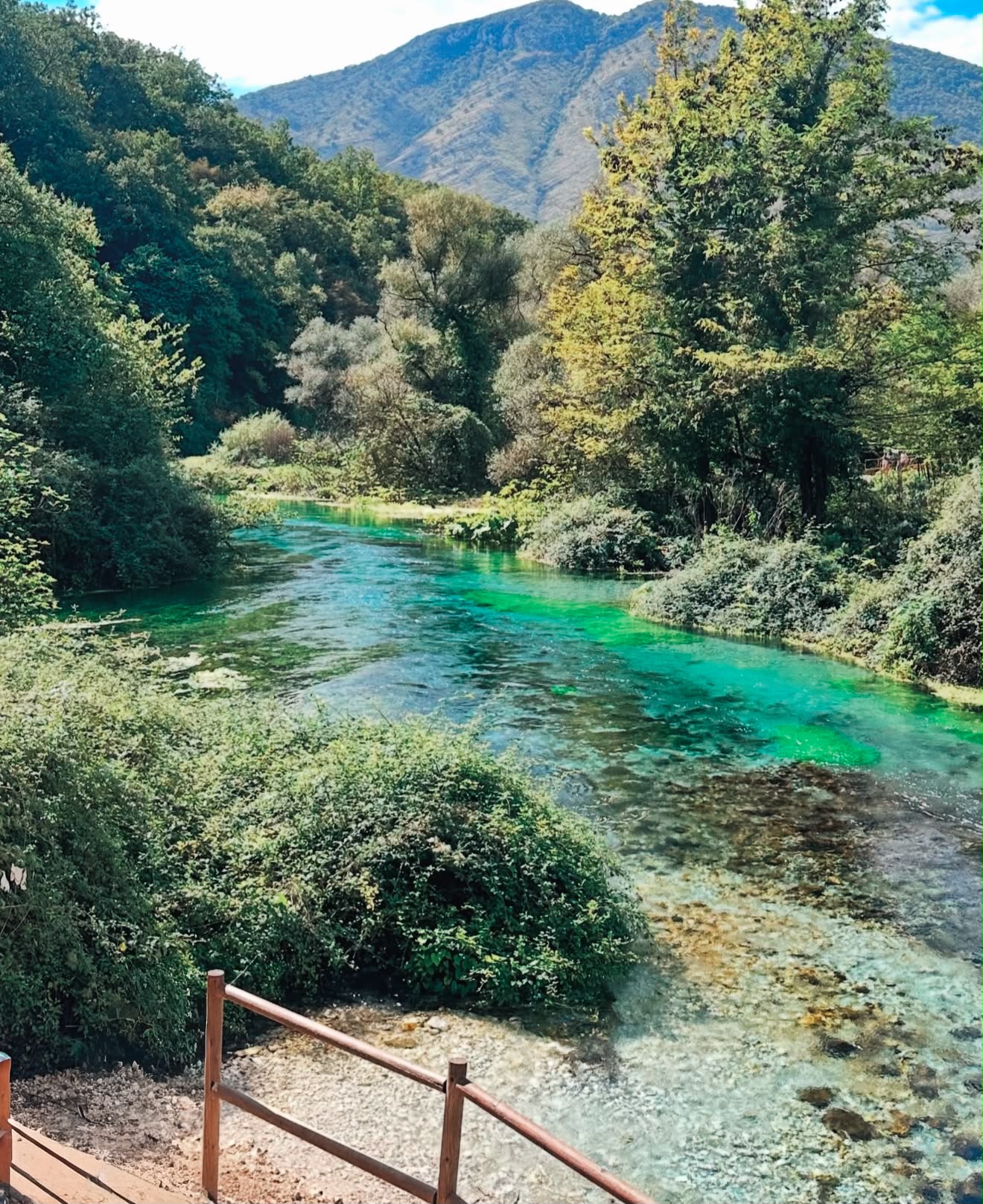
From the car park or ticket booth, it’s about a 2.2 km walk (25–30 minutes) to reach the Blue Eye spring. The trail starts out paved, then turns into a gravel path that meanders through plane trees and open meadows.
Be aware that the first half of the walk is exposed to the sun, especially in summer. There’s little shade until you reach the forest, so bring water, sunscreen, and a hat. By late morning, the heat can be intense, and you’ll see plenty of tourists fanning themselves with brochures.
If you’d rather skip the walk, small electric scooters and mini tourist trains sometimes operate during high season (June–September), taking visitors directly from the car park to the spring for around 200–300 lek each way. They’re a fun option if you’re short on time or visiting with kids.
I personally chose to walk, partly because I love hearing the sounds of nature change as you get closer. The hum of insects fades into birdsong, and suddenly you hear the low, constant roar of water gushing from underground. On my last visit, I overheard a child gasp, “It looks like the eye of a mermaid!”, and honestly, that’s not far off.
If you’re visiting in cooler months (April–May or October), the alternative hiking loop around the spring is lovely. It’s an easy, shaded path with views of the Bistricë River and a few picnic spots where locals gather for lunch. Hardly anyone takes it, so it’s a great way to escape the crowds while still soaking in the scenery.
Observing the Blue Eye: What You’ll See
The path ends at a small clearing where the sound of rushing water grows louder, and then suddenly, there it is: the Blue Eye in all its hypnotic beauty.
A wooden observation deck juts out over the spring, offering the best panoramic view of the “eye.” From here, you can see the water bubbling up with incredible force from the center, a perfect, deep-blue circle surrounded by bands of turquoise and green that shift as the light changes. It’s one of those places that makes you instinctively whisper, even in a crowd.
Most visitors stay on the deck, but if you follow the narrow side trail to the right, you’ll reach a lower viewpoint that’s closer to the water. It’s slightly slippery, but it’s where you’ll get the most reflective photos, especially if you crouch low and frame the trees in the background.
Best time for photos:
Morning light (between 8:30 and 10:30 a.m.) is ideal, when the sun hits the water at an angle and enhances the color contrast between the dark “pupil” and the lighter rings. Around midday, the colors are still beautiful but flatter, and that’s when the tour buses start to arrive.
When I flew my drone here (with permission from the park staff), the view from above looked unreal, a glowing blue iris surrounded by dense green forest, like nature’s own painting. The entire area feels calm despite the crowd; people naturally fall silent when they reach the edge, mesmerized by how clear and endless the spring seems.
Can You Swim in the Blue Eye? (No, Here’s Why)
Despite what you might see on social media, swimming in the Blue Eye is strictly prohibited, and for good reason.
The spring is a fragile natural ecosystem with constant water pressure and a unique microclimate. Even a small amount of sunscreen, sweat, or sunscreen residue can disrupt the delicate balance of minerals and algae that give the water its striking color.
You’ll sometimes see a few reckless visitors jumping in for a quick photo, but this isn’t allowed, and park staff regularly remind people to stay out. The temperature is also near freezing (about 10°C year-round), so even a few seconds in the water is shockingly cold.
When I asked a local park ranger about it, he smiled and said,
“We want people to leave the Blue Eye as clear as they found it; it’s alive, not a swimming pool.”
It’s a good reminder that part of the Blue Eye’s magic comes from how untouched it remains. The best way to experience it is simply to stand still, listen to the water surge from underground, and watch the sunlight dance across its surface.
Safety rules like this are common across protected sites in Albania, especially in popular tourist areas — I’ve covered more essential precautions in Is Albania safe to visit.
Is the Blue Eye Worth Visiting?
The short answer? Yes, but timing is everything.
The first time I visited Syri i Kalter, I arrived early in the morning, before most travelers had even had breakfast in Saranda. The air was still cool, the forest damp with dew, and the only sound was the water gurgling from deep underground. In that moment, it felt magical, almost sacred. The color of the spring looked unreal, like glass lit from below, and I just stood there quietly, completely absorbed.
But when I returned later in the summer with friends, it was a very different scene, crowds on the deck, music from phones, people shouting across the water. The spell broke. The same place that once felt alive and ancient suddenly felt overhyped.
So yes, the Blue Eye is absolutely worth visiting, but it’s not just about seeing it; it’s about how and when you see it. If you go expecting peace, aim for early morning or late afternoon. If you go expecting an easy photo stop, you’ll find it beautiful but fleeting.
For me, the Blue Eye was a reminder that not every place needs to be “done.” Sometimes the most memorable experiences come from standing still and letting nature show off a little, no filters, no rush, no swim needed.
Tips to Have the Best Experience
Go early (before 9 a.m.) or late (after 5 p.m.)
The crowds thin out, the light is soft, and the reflections are at their best.
Timing your visit makes a huge difference, especially in peak season. I’ve broken down the ideal months in my guide to the Best time to visit Albania.
Don’t skip the river path and forest trail
Most people head straight to the deck, but the short riverside trail is shaded and peaceful, it gives you space to take in the scenery without the noise.
Bring these essentials:
- Water and a hat, the walk from the parking lot can get hot.
- Cash for entrance and parking (no cards).
- Non-slip shoes, the rocks near the viewing area can be slippery.
- Patience, especially if you visit in peak summer.
Combine it with nearby highlights:
- Gjirokaster – explore the castle and old bazaar before or after your visit.
- Lekursi Castle – stop for a sunset drink overlooking Saranda Bay.
- Ksamil beaches – end your day with a swim in the Ionian Sea.
If you plan your visit right, the Blue Eye becomes more than a quick photo stop; it’s a quiet, almost spiritual reminder of how powerful and pure nature can still be.
If you’re still mapping out your trip, my full guide on things to know before visiting Albania will help you avoid the most common mistakes first-timers make.